
How a Movable Pool Floor Works: The Essentials
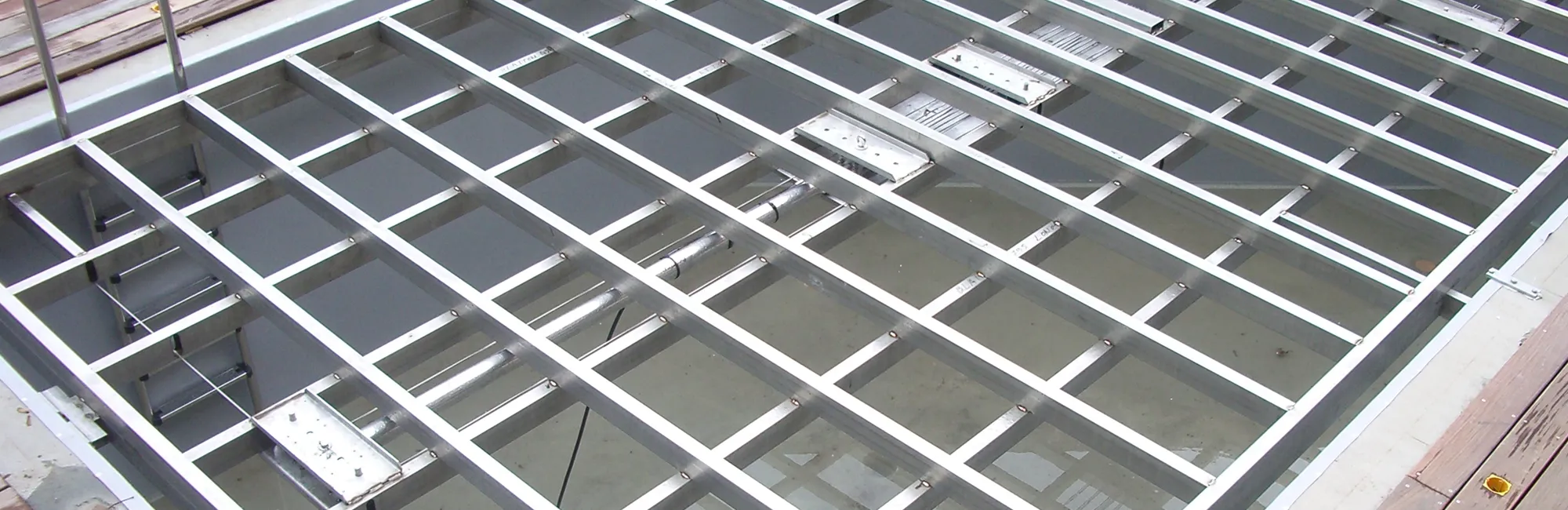
A swimming pool that disappears beneath a terrace in less than a minute, adjusts its depth to suit different uses and helps secure the pool area: all this is possible thanks to a movable floor, which transforms a traditional swimming pool into a versatile living space. A movable pool floor is a platform that moves up and down inside the pool to adjust its depth, or even close it completely and turn it into a fully usable terrace. It is also known as a removable floor or a pool with hydraulic cylinders. Behind this impressive technology lies a movable pool floor system derived from the marine and aerospace industries: a hydraulic lifting system using cables and cylinders, capable of lifting several tonnes with millimetre precision.
Understanding how a movable pool floor works is essential before making an investment: it determines the system’s safety, durability, load capacity and whether it can be installed in a new or existing pool. This comprehensive guide explains the mechanism, the available positions, load resistance, integration requirements and maintenance.
The Hydraulic Cable-and-Cylinder System
This architecture, which has been used for decades in the marine industry (ferry lifts for loading vehicles) and on aircraft carriers (aircraft elevators), ensures industrial-grade reliability and absolute stability. This is why an Aqualift movable floor offers rigidity comparable to that of a house floor: you can walk across it without the slightest deformation.
Stainless-Steel Load-Bearing Cables
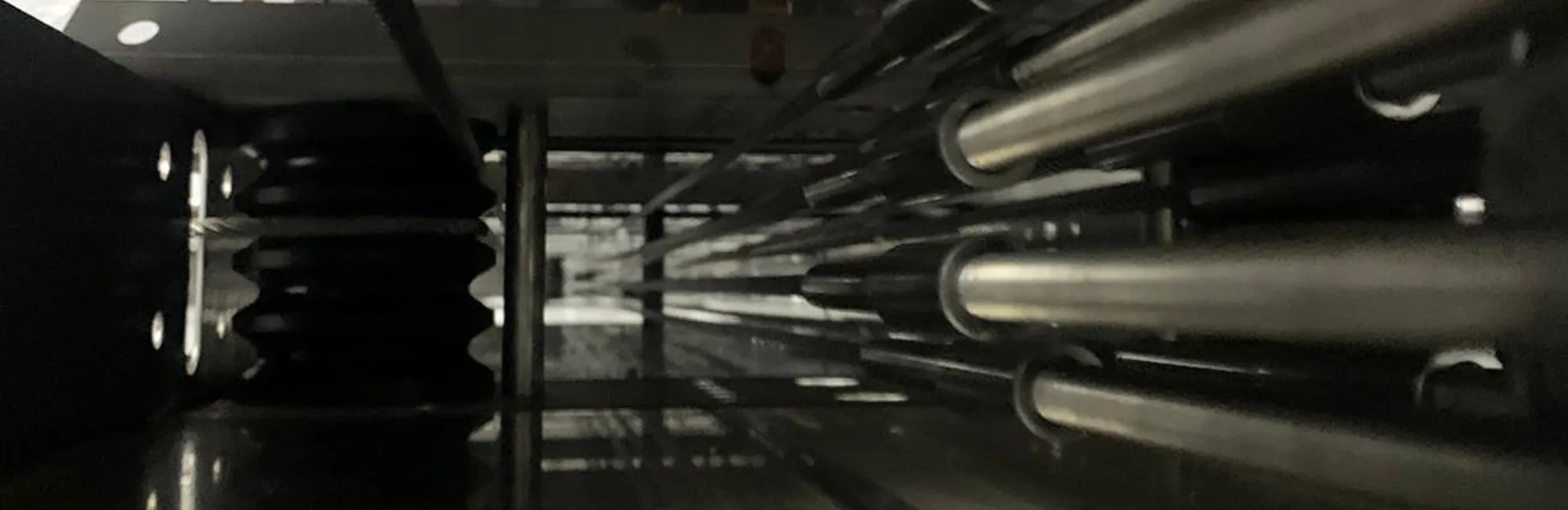
In technical terms, the system is sometimes referred to as a pool with hydraulic cylinders or a suspended floor: the cables are the load-bearing element that enables the structure to move vertically using the horizontally positioned hydraulic cylinder. The movement is smooth, precise and completely silent.
Hydraulic Cylinders
The user controls the movement from the control panel. The floor moves slowly and continuously (taking a few minutes to go from the swimming position to the fully closed position), with manual locking at the end of the stroke to ensure safety.
The Different Positions: Floor, Intermediate Depth and Swimming
- “Swimming” position: the floor is lowered to the bottom of the pool. The pool is used like a conventional swimming pool, with its maximum swimming depth.
- Intermediate depth: the floor is positioned at a water depth suited to the intended use: 1.20 m for learning to swim and water aerobics, 60 to 80 cm for baby swimming sessions or rehabilitation exercises, and 30 cm for a paddling pool. This is one of the solution’s major advantages: a single adaptable pool can meet all needs, for all ages.
- “Terrace” position (floor fully closed): the floor rises flush with the pool coping and completely covers the pool. The pool disappears visually, making way for a fully usable terrace that can accommodate a cocktail party, yoga sessions, lounge furniture or an event. All while maintaining a seamless, high-end aesthetic.
The floor can be moved from one position to another whenever required, without any handling constraints. A pool equipped with a movable floor therefore becomes a multifunctional living space: a swimming pool, a flexible educational area and an outdoor terrace. Discover the full range of possible configurations on the Aqualift movable pool floor range page.
How Much Weight Can a Movable Pool Floor Support? (100 to 500 kg/m²)
What does this mean in practical terms? A floor designed for 250 kg/m² can comfortably accommodate a cocktail party, a yoga mat with around ten participants, garden furniture or even a lightweight vehicle on reinforced versions. For collective uses (hotels, spas and medical centres), the most robust configurations can transform the pool area into a dance floor, seminar room or reception space without any occupancy restrictions.
The permissible load depends on several factors: the floor span (the distance between the cable support points), the number of hydraulic cylinders, the thickness of the stainless-steel structure and the type of finishing material. Each project is subject to a specific assessment by our in-house design office.
Can a Movable Floor Be Installed in an Existing Pool?
The compatibility criteria assessed during the design stage are as follows:
- Pool geometry: a movable floor is most commonly installed in a rectangular or otherwise geometrically simple pool. However, Aqualift’s Liberty range can also adapt to free-form shapes by designing a custom-made floor incorporating steps, corners or projections.
- Available depth: sufficient depth is required to accommodate the movable structure and its travel range (from approximately 1.20 m of usable depth). A pool that is too shallow limits the range of intermediate positions.
- Structural condition: the walls must be sound, perfectly straight, watertight and capable of accommodating peripheral rails or anchoring points.
Technical room: sufficient space must be provided for the hydraulic power unit and an appropriate electrical supply (generally three-phase for larger pools).
When these criteria are met, a movable floor can be installed within a few weeks, without demolishing the existing pool. For smaller pools (urban terraces, rooftops and city gardens), the dedicated Misspool range offers prefabricated movable-floor pools starting from 4 m², making it possible to create a pool in spaces where conventional construction would be impossible. For a personalised assessment of your pool’s constraints, the Aqualift team supports each project through its removable-floor pool design process.
Maintenance and Durability
On a daily basis, the user does not need to carry out any specific maintenance: the floor is cleaned using the same products as the pool (water circulates freely through the technical gaps) and benefits from the pool’s filtration system. When the pool is reopened in spring, a visual inspection is carried out of the mechanism, stainless-steel cables, cylinder, pulleys and the proper operation of the hydraulic system (hydraulic power unit, pipework, fittings, electrical power cabinet and condition of the system’s stainless-steel structure).
A technical inspection can be offered as part of a maintenance contract, with the frequency determined according to the installation. It is carried out by Aqualift-approved technicians.
In terms of durability, choosing stainless steel for the structure and load-bearing cables provides the best guarantee: it withstands chlorinated environments, including coastal regions. The hydraulic cylinders, isolated from the water circuit, are proven industrial components with a service life measured in thousands of cycles.
FAQ: Your Questions About How a Movable Pool Floor Works
How does a movable pool floor actually work?
A movable pool floor works using a floor suspended by stainless-steel cables and operated by hydraulic cylinders. A hydro-electric power unit installed in the technical room pressurises the fluid, causing the cylinders to raise or lower the entire structure through its full range, from the bottom of the pool to the coping. The movement is slow, continuous and fully controlled remotely.
How much weight can a movable pool floor support?
The professional standard for a walkable floor is 100 kg/m². Aqualift movable floors are designed to support between 100 and 500 kg/m², depending on the range and configuration. This means that, in the raised position, the area can be used like a conventional terrace: for furniture, cocktail parties or even a dance floor on the highest-end versions. The exact load capacity is determined by the design office for each project.
Can a movable floor be installed in an existing pool?
Yes, in most cases. Four requirements are checked beforehand: suitable geometry (preferably rectangular, or a free-form shape with the custom-made Liberty range), a depth of at least 1.20 m, a sound and watertight pool structure, perfectly straight pool walls, and a technical room capable of accommodating the hydraulic power unit. The installation can be carried out without demolishing the pool.
What is the service life of a movable pool floor?
With regular maintenance and standard cleaning, together with a technical inspection at the agreed intervals, a high-end movable floor can last for several decades, essentially matching the service life of the pool itself. The stainless-steel structure and cables withstand chlorine and saline environments, while the industrial hydraulic cylinders are proven to withstand thousands of operating cycles.
What positions are available for a movable pool floor?
The floor can be positioned at any height between the bottom of the pool and the coping. Three main positions are used: swimming position (floor at the bottom, with the pool fully usable), intermediate position (from 30 cm to 1.20 m for a paddling pool, water aerobics or baby swimming), and terrace position (floor flush with the coping, causing the pool to disappear and creating a fully walkable surface).
Is movable floor technology reliable?
Yes. Hydraulic cable-and-cylinder systems have been used for decades in the marine industry (ferry vehicle lifts) and aerospace (aircraft carriers). Aqualift adapted this technology for swimming pools 25 years ago: more than 1,000 installations in 50 countries confirm the technology’s reliability. The floor offers rigidity comparable to that of a house floor.
Planning a movable-floor pool project?
Our design office supports you from the initial design stage, whether for a new-build project or a renovation. Start your project ›
